
“Unlike literature, songs are meant to be sung, not read.” — Bob Dylan, Nobel Prize acceptance speech 2016
Lyrics can look pretty ridiculous on the page. They’re full of inane repeats like, “yeah yeah yeah” that stack on top of each other and scroll down the page for no apparent reason. They use language that’s both conversational and not how you speak in conversation. They look like poems, but read like…well, like bad poems.
The biggest issue with a lyric sheet is that, unlike poetry, so much of the content of the lyric never makes it to the page. Lyric resists our ability to notate it, because it belongs in flight—”sung, not read.” We think of lyric as something separate from “music,” but if we consider its origin story, we get a different picture, and pick up a broad range of options when it comes to writing, and revising, them.
Immaculate Conception
Some paleoanthropologists believe that there was no real difference between music and lyric—they were two parts of the way early homo sapiens communicated. In short, the “language” part gave detailed information, and the “music” part gave that information rhythms and melodies that made it easy to remember. This spoken-song is referred to as “musilanguage,” and though the theory isn’t provable, there is supporting evidence in the way we still use music when we learn the alphabet, or the state capitals, or the digits of pi.
Why does a mnemonic device like the alphabet song work? Neuroscientists have shown that music, when combined with language, lights up far more of the brain than either one can do on its own. Even weirder, the music centers and language centers share real estate, and can actually help each other out—you may have noticed that part of a lyric can jog loose a melody, which will then recall the rest of the lyric, and before you know it, you’ve remembered an entire song in a flash. (It works in reverse, too, with a melody recalling a lyric.)
NOTE: This means that songs with words use more of the brain, and are more memorable, than either instrumental music or prose. Which also means that if you want to write memorable songs, but you’ve been thinking that lyrics are not important, maybe it’s time to rethink.
Evolution: Overrated?
Even today, we songwriters have the same issue that faced early homo sapiens—we’re working in an oral tradition, and we want our message to be received both viscerally, and preferably on first listen. So, when a lyric feels like it’s not doing that, the evolutionary answer is not necessarily different words; it might be that the words want a different rhythm section.
This could be why we have thousands of ways to make language more rhythmic. I’ve listed some of them here, with examples. None of them have to do with deepening the content of a lyric; they’re all about deepening their rhythmic quality, and hopefully, their memorability. They use repetitions, and palindromes, and paradoxes you can feel first, and understand soon after.
Prompt
Parallelism (Isocolon)
What: Any repetition of grammatical structure, from literal repetition of choruses, to repetition of grammatical choices, to parallel narratives
Why: Establishes a rhythm, unifies images and ideas, increases memorability
Examples:
You’re hot, then you’re cold
You’re yes, then you’re no
You’re in, then you’re out
You’re up, then you’re down
You’re wrong, when it’s right
It’s black and it’s white
We fight, we break up
We kiss, we make up
—Katy Perry, “Hot N Cold”
It’s like the more money we come across
The more problems we see
—Notorious B.I.G., “Mo Money Mo Problems”
Anaphora
What: Repetition of a word or phrase at the beginning of lines
Why: It creates rhythm, builds emotion and a sense of “rightness,” and acts as a hook
Examples:
Every breath you take
Every move you make
Every bond you break
Every step you take
I’ll be watching you
—The Police, “Every Breath You Take”
Everybody outside,
Everybody outside, when I pull up outside all night no,
Everybody high five,
Everybody wanna smile,
Everybody wanna lie that’s nice no.
— Chance the Rapper, “All Night”
Epistrophe
What: Repetition of a word or phrase at the end of lines
Why: Rhythmic, “lands” the line on a perfect (too perfect?) rhyme, and acts as a hook
Examples:
I like it, I’m not gonna crack
I miss you, I’m not gonna crack
I love you, I’m not gonna crack
I killed you, I’m not gonna crack
—Nirvana, “Lithium”
She was supposed to buy ya shorty Tyco with ya money
She went to the doctor got lipo with ya money
She walkin’ around lookin’ like Michael with ya money
Shoulda got that insured, Geico for ya money
—Kanye West, “Gold Digger”
Epanalepsis
What: A phrase or section that starts and ends with the same word
Why: Unifies a section, bookending it and giving a feeling of “full circle,” draws attention to shades of a single word or phrase; takes that word or phrase on a short journey, then re-evaluates how it has changed.
Examples:
Yesterday
All my troubles seemed so far away
Now it looks as though they’re here to stay
Oh, I believe in
Yesterday
—The Beatles, “Yesterday”
“Beloved is mine; she is beloved.”
—Toni Morrison, Beloved (Not a song, but a great example)
Alliteration
What: Consecutive words that start with the same letter
Why: Rhythm, sonic interest, memorability, repeatability, a linguistic flex
Examples:
I’ve been a puppet, a pauper, a pirate, a poet, a pawn and a king
—Frank Sinatra, “That’s Life”
Top o’ the morning, my fist to your face is fuckin’ Folgers
—Run the Jewels, “Blockbuster Night Part 1”
They paved paradise, put up a parking lot
—Joni Mitchell, “Big Yellow Taxi”
Antimetabole & Chiasmus
What: An inverted A-B-B-A phrase structure, almost like a palindrome in phrase form. Chiasmus is an inverted structure that repeats the same ideas or concepts; antimetabole is that inverted structure using the exact same words, but to different conclusion
Why: Using the same words sums up a paradox, and the parallelism makes it feel “right”; rhythm
Example (Chiasmus):
Injustice anywhere is a threat to justice everywhere
—Martin Luther King, Jr., “Letter from Birmingham Jail”
Examples (Antimetabole):
Ask not what your country can do for you, ask what you can do for your country
—John F. Kennedy, Jr.
I don’t trust nobody and nobody trusts me
—Taylor Swift, “Look What You Made Me Do”
if you can’t be with the one you love, honey,
Love the one you’re with
—Crosby, Stills, Nash, and Young, “Love the One You’re With”
Example (both chiasmus and antimetabole):
Rollin’ down the street, smokin’ indo, sippin’ on gin and juice, laid back
with my mind on my money and my money on my mind.
—Snoop Dogg, “Gin and Juice”
Polysyndeton
What: An overly long phrase connected with clauses or conjunctions
Why: Gives a sense of being overwhelmed by language; gives a breathlessness in both the line’s length, and the line’s emotional content; creates rhythm with conjunctions, or verbs
Examples:
They wanna say it’s a war outside,
and a bomb in the street,
and a gun in the hood,
and a mob of police,
and a rock on the corner,
and a line for the fiend,
and a bottle full lean,
and a model on the scene, yup!
—Kendrick Lamar, “i”
You fall,
and you crawl,
and you break
and you take what you get
and you turn it into honesty,
and promise me,
I’m never gonna find you fake it”
—Avril Lavigne, “Complicated”
(A looser version of polysyndeton)
And I hope that you die
And your death will come soon
I’ll follow your casket
By the pale afternoon
And I’ll watch while you’re lowered
Down to your deathbed
And I’ll stand over your grave
‘Til I’m sure that you’re dead
—Bob Dylan, “Masters of War”
A Concluding Anaphora
Go easier on the lyric sheet.
Go harder on the lyrics.
I hope this helps. –M
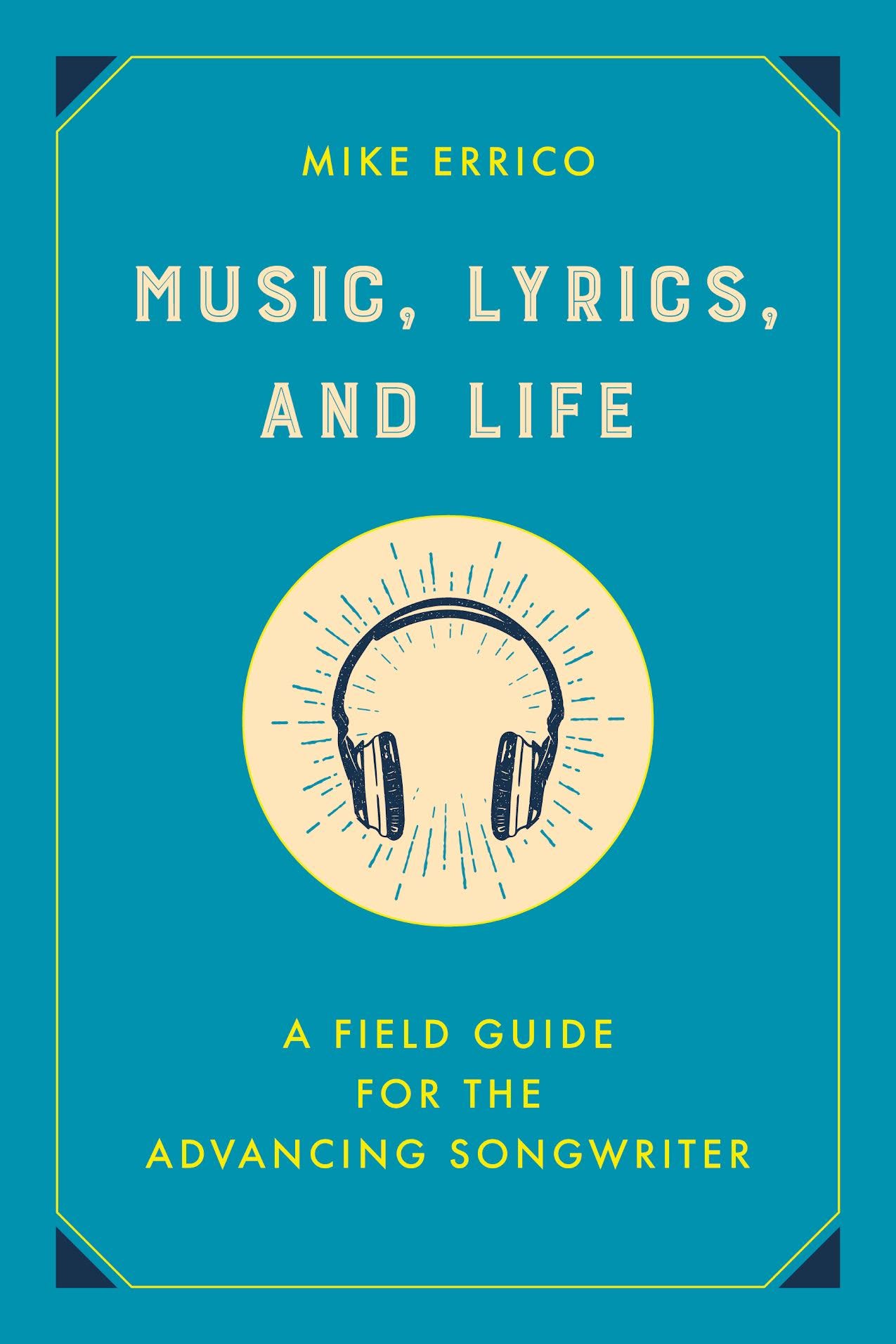
Music, Lyrics, and Life, available in print and audiobook.
Signed copies are available at 25% off on Bandcamp with the promo code: substack2025
…or if this is all too much, you could just buy me a coffee.