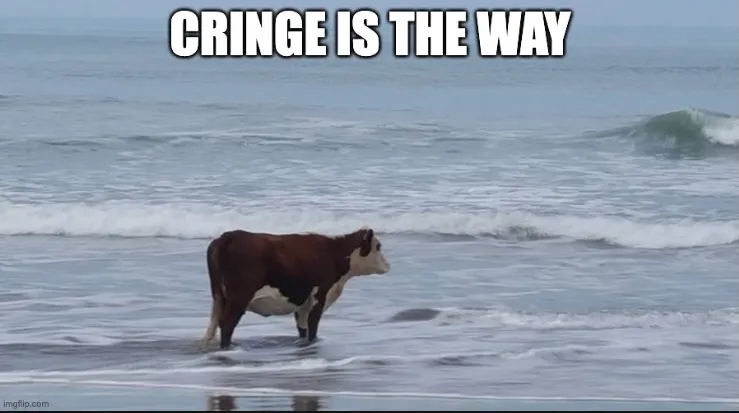

In my classes, cringe comes on like a seizure: A draft of a song will begin, and we’ll nod along, following the lyric sheet that’s projected on the front wall of the classroom. Suddenly, the writer will wince as if shot or poisoned. They’ll hide their faces behind open hands, notebooks, or laptops. In a classroom with a conference-style table, they’ll slide off their chairs and seek shelter underneath. In the winter, they’ll drape coats over their bodies as if transformed into a pile of laundry. It’s like watching a documentary about sea creatures that recoil into coral reefs or squirt ink when they feel they’re being hunted. Are these writers being hunted? Judging from the contortions and the camouflage, it sure looks like it.
By the time you read this, cringe probably won’t be called cringe. Like a snake, it sheds names: square; cheesy; corny; awkward; cheugy; whack; dumb-chilling; humiliating; jive; dodgy; excruciating; indecorous; and on back through the ages. Each of these words relate to cringe in the way we relate to Neanderthals—similar DNA, different fashion sense. You’ll recognize cringe by what it does, not what it’s called.
Addressing the 2022 graduating class at NYU (where I work) Taylor Swift advised us all to “learn to live alongside cringe,” and she’s right: the toxic blend of writer’s block, social anxiety disorder, mortality, and incompetence is a job hazard we all have to brace ourselves and deal with. What she didn’t mention is that cringe also has a shadow side that hides our greatest asset, and the sooner we realize that, the easier it is to crawl out from under the table and embrace it.
Cringe Is an Evolutionary Conflict
The issue goes way back: We humans are pack animals, and we have always worried about getting kicked out of the pack. This is still true. Candidates for eviction include the ill, the old, the injured, and anyone who threatens pack unity—internal competitors, or unwelcome guests. Once tossed out, we face a world teeming with predators we can barely handle as a group, let alone solo. It’s basically a death sentence, so we do what we can to avoid it.
One smart strategy for survival is to get in line and follow whatever house rules bind the pack together. These cultural rules are coded into stories, myths, and songs about where we came from, what we’re doing here, and what it’s like when we leave. We take these stories on faith, the same way we believe in the value of pieces of paper that say “five dollars” on them. In Sapiens: A Brief History of Humankind, historian Yuval Noah Harari writes, “Any large-scale human cooperation—whether a modern state, a medieval church, an ancient city or an archaic tribe—is rooted in common myths that exist only in people’s collective imagination.” Myths and stories are our social glue, and keeping society glued is a matter of life and death.
Policing the Story
Many of my students have had to spend their lives worrying about sticking out and getting hammered down. Some of them pine for an inner life that’s more in line with accepted norms—they’d trade the constant peril for a boring moment of peace, at least for a little while. Others search for sanctuary from a lifetime of sliding under tables and hiding under coats for simply being who they are. It’s all part of the curse of the blessing of seeing the world from a unique vantage point. There’s not a lot of sympathy out there for people like that. Quite the opposite, actually: They’re considered a threat.
If we hear little stories about tall poppies and still can’t put together the fact that they’re not really talking about poppies, are they, neighbors and authority figures with (mostly) good intentions will step in to remind us that, in fact, there are rules. They might use humor to keep things civil while underscoring our infractions; politeness to request that we cease and desist; parody to mirror our questionable moves; and a barbed use of the word “cringe” (or whatever they’re calling it at the time).
It’s no surprise that frantic middle schoolers use it to describe pretty much everything. This isn’t surprising: They’ve been tossed into a complex society, and they’re trying to figure out without a lot of context. It’s a little like being a Neanderthal who’s been tossed into the woods—the stakes appear to be life-and-death, and everything is a threat. Tweens toss the word “cringe” around with the urgency adults reserve for “Fire!” or “Shark!”
Cringe Is Mandatory
—Ralph Waldo Emerson
Here’s another way to look at it: Cringe is not the result of failure; it is the product of risk. I dedicate a week—Cringe Week—to writing something unsettling—a song with big risks, mortifying admissions, colossal failures, shocking triumphs—if only to feel what it’s like to survive the leap. In my classroom, cringe is a synonym for bravery, and bravery is always rewarded. And some take the opportunity to show themselves, maybe for the first time.
The pack recoils at first—my class often blows up in supportive laughter and mock-charges of cringe—but then the society expands to accommodate its contributors. Those cringey student-heretics are renamed trailblazers, but the word they might be looking for is “artist.” The rules, at least in our social circle, get rewritten. The story changes. And that’s how it starts.

All Is Cringe
The most important building blocks of writing are cringe, and the reward for leaning into cringe is Voice—the very thing we, as writers, are looking for.
Imperfection is cringe. Drafts and revision are wrestling matches with cringe. Love itself is cringe: Clinical psychologist Robert Firestone wrote, “…[love] threatens long-standing psychological defenses formed early in life…leaving a person feeling more vulnerable.” This is why convincing love songs are so hard to write. There’s a lot of cringe to overcome.
Cringe is revelatory
Cringe, once seen, can never be unseen. It can by ugly, awkward, and may come out all wrong, but that’s how everything is when it uses its voice for the first time.
Consider those moments in relationships is when someone reveals “quirks” or goofy parts of their personality. They refer to them as outlier habits that only insiders know about, but as the relationship grows, we realize they’re not “quirks” at all—they’re defining features. If we’re really lucky, our partners stop trying to hide their nature. That’s called trust. And trust is transformative.
Cringe invites humility: How can we not be humble in the face of so many other ways to live?
Cringe is heroic, if we think of the heroes’ journey as the one we wish we had the courage to take. Cringe heroes are role models who make our desires seem more attainable, and our resistance more resistible. They inspire us towards cringe so that we can move beyond it, and into our authentic selves.
By the way, this whole conversation? Is cringe. And what can I say?
I’m flattered.
Cringe is a clarion call.
Cringe is a door.
Walk through the door.
Get cringe.
Mike Errico is a recording artist, author, and songwriting professor at Yale, the New School, and NYU’s Clive Davis Institute of Recorded Music. His first book, Music, Lyrics, and Life: A Field Guide for the Advancing Songwriter, is available everywhere.