by Mike Errico | Jun 21, 2026 | Lessons, Music Lyrics and Life
In my classes, cringe comes on like a seizure: A draft of a song will begin, and we’ll nod along, following the lyric sheet that’s projected on the front wall of the classroom. Suddenly, the writer will wince as if shot or poisoned. They’ll hide their faces behind open hands, notebooks, or laptops. In a classroom with a conference-style table, they’ll slide off their chairs and seek shelter underneath. In the winter, they’ll drape coats over their bodies as if transformed into a pile of laundry. It’s like watching a documentary about sea creatures that recoil into coral reefs or squirt ink when they feel they’re being hunted. Are these writers being hunted? Judging from the contortions and the camouflage, it sure looks like it. By the time you read this, cringe probably won’t be called cringe. Like a snake, it sheds names: square; cheesy; corny; awkward; cheugy; whack; dumb-chilling; humiliating; jive; dodgy; excruciating; indecorous; and on back through the ages. Each of these words relate to cringe in the way we relate to Neanderthals—similar DNA, different fashion sense. You’ll recognize cringe by what it does, not what it’s called. Addressing the 2022 graduating class at NYU (where I work) Taylor Swift advised us all to “learn to live alongside cringe,” and she’s right: the toxic blend of writer’s block, social anxiety disorder, mortality, and incompetence is a job hazard we all have to brace ourselves and deal with. What she didn’t mention is that cringe also has a shadow side that hides our greatest asset, and the sooner we realize that, the easier it is to crawl out...
by Mike Errico | Jun 21, 2026 | Uncategorized
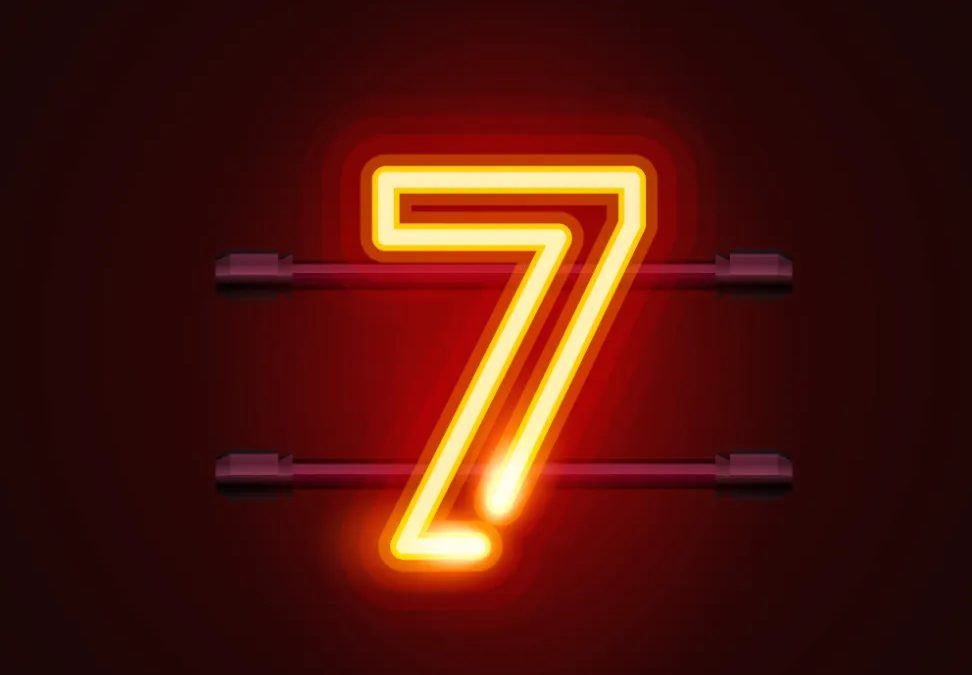
The other day, a student came in with a song that had one of those hooks that spell out the main idea (think “A-B-C, easy as 1-2-3…”). This is a time-honored technique, but when I played the song in class the refrain was: B-L-U-E-I-S-M-Y-T-R-U-E-M-O-O-D (That wasn’t the real refrain, but close enough.) It may be a little easier to see on the page, but in a song, at speed, rising and falling with a melody…forget it. Everyone was lost. Some needed to inspect the lyric sheet to see what it spelled out. Safe to say, this was not the goal of the song. Walking home after class, I tried to figure out what the problem might have been with it. I remembered successful examples of songs with spelled-out hooks. My process went something like: Aretha, my first thought: “R-E-S-P-E-C-T”—seven letters. Gwen Stefani: “B-A-N-A-N-A-S”—seven letters. Hm. Chappell Roan’s “H-O-T-T-O-G-O”—seven lett…wait, really? (Pause to recount.) Yep. Tammy Wynette’s classic: “D-I-V-O-R-C-E”—holy… Ariana Grande’s “Break Your Heart Right Back”: “G-A-M-B-I-N-O”—OK, I see… Tommy Tutone’s “Jenny Jenny”: “8-6-7-5-3-0-9”—…that it’s pretty clear… Beastie Boys’ “The New Style”: “B-E-A-S-T-I-E”—…that a pattern… OutKast’s “Intro”—“O-U-T-K-A-S-T”—…is developing… Megan Thee Stallion’s “Wanna Be”: “B-A-D-D-E-S-T”—…with seven-letter hooks. I waded into childhood songs, and oh my God: “Jane and Peter, sittin’ in a tree/ K-I-S-S-I-N-G” “‘Cause Oscar Meyer has a way with B-O-L-O-G-N-A.” Seasoned research scientist that I am, I did what scientists do, which is Google if there are more. Oh yeah, there are. Some spell out their seven-letter titles: Gwen Stefani’s “Serious”: “S-E-R-I-O-U-S” Marshmello & Anne Marie’s “Friends”: “F-R-I-E-N-D-S” …and some just spell it out in the title itself: Gayle, “a-b-c-d-e-f-u”...
by Mike Errico | Jun 21, 2026 | Lessons, Music Lyrics and Life
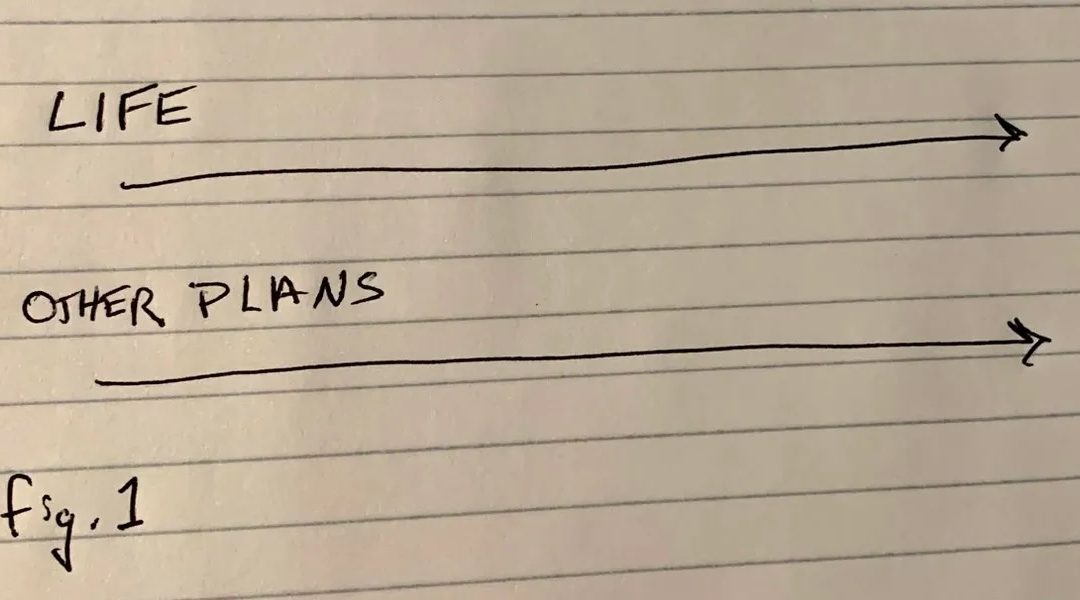
From my Substack. Subscribe today. Hi. While researching the ceiling above my bed in preparation for what I would say today, I remembered a lyric that offered a definition of life: “Life is what happens while you’re making other plans.” Like any good lyric, it’s compact, hooky, repeatable, and it sounds right—as if it’s put its finger on something true that’s been just out of reach all this time. It’s known in the music industry as a “bumper sticker,” and it stuck in my head, cycling over and over. John Lennon sang it. He was in the Beatles, a band that was old when I was young. Perhaps you’ve heard of them. Perhaps you’ve heard that there was a generation before you that’s better than you’ll ever be because they pretty much ensured it by taking what they were given, breaking it, and handing the shards of it to the future. Better music, better prospects, better everything—perhaps you’ve heard. Perhaps you’re tired of hearing it. Perhaps by now you’re wondering who was making plans while life happened back then. And perhaps you’re wondering what present plans are making life happen today. “Life is what happens while you’re making other plans.” The lyric attempts to decouple life from planning. It tries to absolve the speaker, and end the conversation. It feels good, momentarily, like a beautiful song, but as this generation grows into its own life, it must reckon with the plans of a previous generation. History is a story of plans and the life that resulted, so there’s a lot riding on who tells the story. This is not a knock on John...
by Mike Errico | Jun 21, 2026 | Lessons, Music Lyrics and Life
In case you don’t know, I’m doing a lot on Substack lately. Subscribe and check it out. Til then… “Unlike literature, songs are meant to be sung, not read.” — Bob Dylan, Nobel Prize acceptance speech 2016 Lyrics can look pretty ridiculous on the page. They’re full of inane repeats like, “yeah yeah yeah” that stack on top of each other and scroll down the page for no apparent reason. They use language that’s both conversational and not how you speak in conversation. They look like poems, but read like…well, like bad poems. The biggest issue with a lyric sheet is that, unlike poetry, so much of the content of the lyric never makes it to the page. Lyric resists our ability to notate it, because it belongs in flight—”sung, not read.” We think of lyric as something separate from “music,” but if we consider its origin story, we get a different picture, and pick up a broad range of options when it comes to writing, and revising, them. Immaculate Conception Some paleoanthropologists believe that there was no real difference between music and lyric—they were two parts of the way early homo sapiens communicated. In short, the “language” part gave detailed information, and the “music” part gave that information rhythms and melodies that made it easy to remember. This spoken-song is referred to as “musilanguage,” and though the theory isn’t provable, there is supporting evidence in the way we still use music when we learn the alphabet, or the state capitals, or the digits of pi. Why does a mnemonic device like the alphabet song work? Neuroscientists have shown that music, when combined with language, lights up far more...